
The Washington Manual
Unbound Medicine, IncMedical
4.96.00 Reviews
- Version
- 2.8.52
- Installs
- 10.00K
- Age Rating
- Everyone
Screenshots
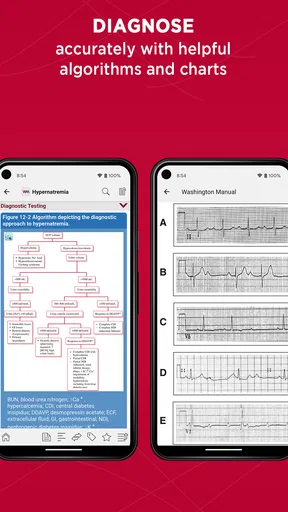
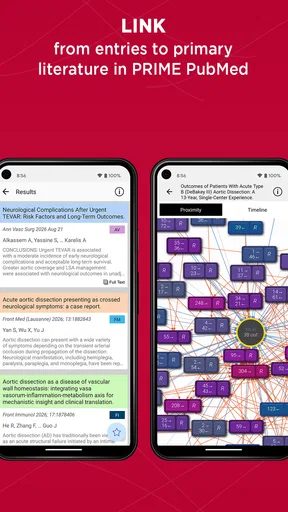
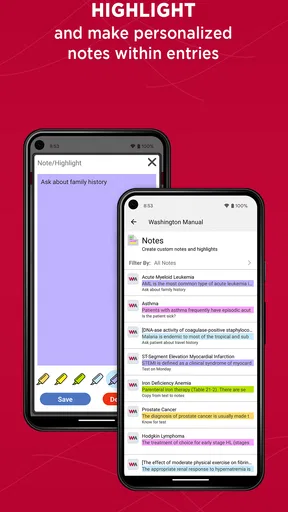
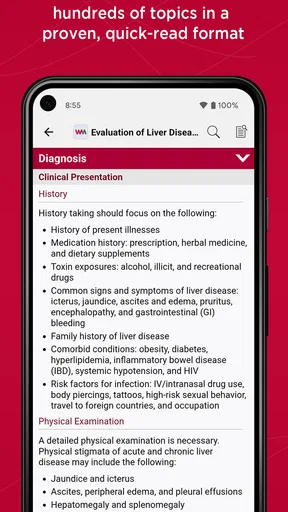
Our Review of The Washington Manual
 Analysis by Appyee
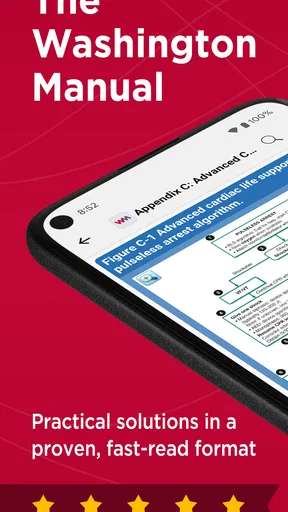
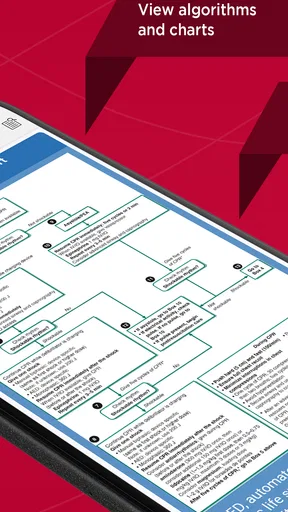
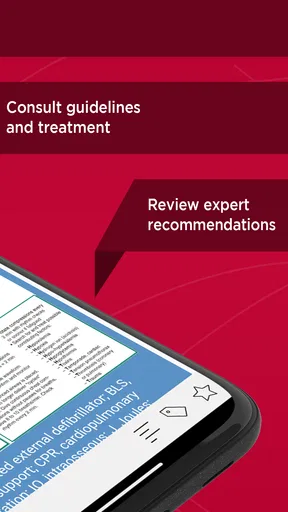
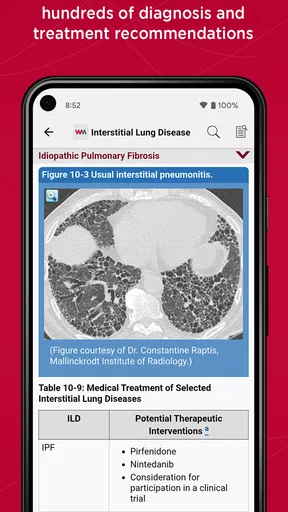
I approached The Washington Manual as a quick clinical reference rather than something to read from beginning to end. That distinction matters. This is a medical app from Unbound Medicine, Inc, built around the Washington Manual of Medical Therapeutics, and its value depends on how quickly it helps you move from a question to a useful point of reference. In my experience, it makes the most sense for people who already understand medical language and want a compact companion during study, revision, or clinical work.
My overall view is positive but deliberately cautious: this is a focused reference tool, not a substitute for training, local protocols, patient-specific assessment, or professional judgement. It feels most useful when I need to check a familiar topic without opening a large textbook. It is less convincing for someone who wants guided teaching, visual explanations, or a broad health app written for everyday patients.
What makes this medical reference useful
The strongest part of the app is its purpose. Instead of trying to cover every kind of health information, it centers on therapeutic guidance associated with the Washington Manual. That focus gives the experience a practical character. I can imagine opening it between tasks, during revision, or while preparing to discuss a case, then using it to refresh a treatment-related concept rather than searching through unrelated material.
That narrow role is also why the app can be easier to live with than a general medical encyclopedia. A general search engine often returns a mixture of patient pages, commercial content, outdated summaries, and highly technical papers. A large textbook may be authoritative but slow to navigate when I only need to orient myself around one subject. This app sits between those options: more specialized than a casual web search and more immediately accessible than carrying a full reference book.
I would not treat a high store rating as proof that every clinical situation will be handled perfectly, but a 4.9 average from around 178 ratings does suggest that existing users generally find the product worthwhile. The app has also passed the ten-thousand-install mark, which gives it a modest but established presence rather than making it look like an untested experiment. Those figures are useful context, though they should never replace checking whether the content fits your training level and local practice.
The free download lowers the barrier to trying it, but the in-app purchase range, from $79.99 to $99.99 per item, changes the decision considerably. I would install it to inspect the available experience before committing to a purchase. For a student who only needs occasional revision, that price may be difficult to justify. For a clinician or trainee who repeatedly uses this specific reference, the calculation is different: saving time several times a week can make a specialist resource more valuable than a collection of free but inconsistent searches.
A workflow that feels realistic
Picture a busy study session. I am reviewing a case, reach a treatment-related question, and do not want to lose twenty minutes jumping between browser tabs. I would open the manual, search for the relevant subject, read enough to understand the context, and then return to the case notes. The important benefit is not that the app magically makes a decision for me. It is that it gives me a disciplined place to begin checking the issue.
A useful habit is to separate “orientation” from “action.” I would use the app to orient myself to terminology, therapeutic considerations, and the structure of a topic. Before acting on anything, I would compare that information with current institutional guidance, the patient’s details, contraindications, allergies, laboratory results, and advice from a qualified professional. This two-step workflow is safer and more realistic than treating any mobile reference as an automatic prescription engine.
Another practical use is pre-round preparation or exam revision. Rather than reading randomly, I would choose a small group of related topics and use the app to identify what I do and do not understand. Afterward, I would write my own short summary or test myself without looking at the screen. That turns the manual into a checking tool instead of encouraging passive scrolling.
Why the focused format can beat ordinary alternatives
The usual alternatives each have a weakness. Search engines are fast, but their results require careful filtering. Printed manuals are dependable companions for some readers, but they are less convenient when I am away from a desk. Broad medical apps may offer more subjects, yet their extra breadth can make a specific therapeutic question harder to isolate. The Washington Manual’s advantage is the combination of a recognizable clinical reference and a phone-based format.
That does not mean it wins every comparison. A current institutional database may be better when local protocols, formulary rules, or rapidly changing guidance are central to the decision. A formal learning platform may be better for someone who needs videos, quizzes, explanations from first principles, or a structured course. A patient-facing health app will usually be better for plain-language education. I see this app as strongest when the user already knows what kind of information they are seeking.
The app’s age rating is Everyone, but that label should not be confused with suitability for every reader. A medical reference can be available to anyone while still assuming a level of knowledge that a general user does not have. I would be especially careful about handing it to a worried patient as though it were a self-diagnosis guide. Medical terminology without context can increase anxiety, and treatment information can be misunderstood when separated from examination and professional advice.
Where the experience needs caution
The biggest limitation is not necessarily the interface; it is the risk of overconfidence. A concise reference can feel authoritative because it is easy to read, yet concise information often leaves out the patient-specific details that determine whether a treatment is appropriate. I would never use a brief entry as the only basis for changing medication, selecting a dose, or responding to an emergency.
There is also a financial trade-off. Calling the app free is accurate for installation, but the meaningful content may involve a substantial one-time purchase. That makes the trial stage important. Before paying, I would check how much of the material is accessible, whether the organization matches my study habits, and whether the topics I actually need are represented in the edition or package offered. A reference can be excellent in principle and still be poor value for someone who opens it only once a month.
The version shown is 2.8.52, and the minimum operating-system requirement is iOS 9. That broad compatibility may help people using older Apple hardware, but compatibility alone does not answer the questions that matter most for medical software: how current the content is, how revisions are presented, and whether the material aligns with the guidance used where I work or study. I would therefore treat update awareness as part of responsible use, not as an optional extra.
One subtle weakness of a compact manual is that it can encourage a “lookup and leave” habit. I might find a phrase that sounds relevant, stop reading too soon, and miss qualifications elsewhere in the discussion. My workaround would be to read the surrounding section, note any warnings or exceptions, and then verify the conclusion through a second trusted source when the decision carries meaningful risk. That extra minute is more valuable than false speed.
Who should install it
I think the best audience is medical students, residents, nurses, physician assistants, and clinicians who are comfortable with professional terminology and want a portable therapeutic reference. It may also suit educators who need to refresh a topic before explaining it, provided they use it alongside their preferred teaching resources rather than as the entire lesson.
Students should approach it with a specific plan. I would use it after lectures or case discussions, not as a replacement for them. Search for a topic, identify the main idea, then compare it with class notes and current guidance. The app is most valuable when it closes a gap in understanding. It is less valuable when the user expects it to teach anatomy, pathology, pharmacology, and clinical reasoning from the ground up.
Experienced professionals may appreciate the convenience, but they are also the people most likely to recognize its boundaries. If your work depends heavily on local formularies, hospital policies, specialist guidelines, or rapidly changing evidence, this should be one reference among several. It can help you frame a question, but it should not override an official protocol or a direct consultation with a specialist.
I would tell general users to skip it unless they have a genuine educational reason to consult a professional medical manual. The Everyone rating makes the app broadly accessible, but accessibility is not the same as readability. If your goal is understanding a diagnosis, preparing questions for a doctor, or learning basic health information, a plain-language patient resource is likely to be clearer and less intimidating.
Questions I would answer before paying
“Is the free version enough?” My practical answer is: use the free installation as an evaluation period, then decide based on your actual routine. Since individual in-app items can cost between $79.99 and $99.99, I would not purchase impulsively. First determine whether the navigation feels natural, whether the reference matches your level, and whether you expect to consult it often enough to justify the expense.
“Can it replace a medical textbook?” No, and I would not want it to. A manual is useful for quick consultation, but textbooks explain concepts in greater depth and courses provide sequence, exercises, and feedback. I would use this app to support learning and recall, then return to fuller material when I need mechanisms, evidence appraisal, or a detailed explanation.
“Can I rely on it during patient care?” I would use it as a reference prompt, never as the sole authority. For real patient decisions, I would check current local policy, patient-specific information, interactions, contraindications, and professional advice. If the situation is urgent, I would follow emergency procedures rather than spend time treating a mobile app as a decision-maker.
“Is it suitable for someone without medical training?” It is available to a general audience, but I would recommend it mainly to readers who already have a medical foundation. Without that foundation, entries may be difficult to interpret and could invite unsafe conclusions. A patient education source written in everyday language is usually a better first stop.
“What is the best way to use it?” I would search with a concrete question, read beyond the first tempting sentence, record the point I needed, and verify important decisions elsewhere. That workflow prevents the app from becoming a source of isolated facts. It also makes the purchase easier to judge because I can see whether it genuinely improves my study or clinical routine.
My final assessment
The Washington Manual succeeds because it knows what kind of tool it wants to be: a portable medical reference for therapeutic questions, not a complete education platform and not a patient diagnosis service. I like its focused identity, and I can see real value in having a familiar clinical resource available when a textbook or browser search feels too slow.
My reservations are equally important. The purchase price is high enough to demand a deliberate trial, and the app’s usefulness depends heavily on the reader’s background. Its content should be checked against local and current guidance, especially when a real patient’s safety is involved. Anyone looking for interactive lessons, plain-language explanations, or broad health coverage will probably be happier elsewhere.
For the right reader, I would recommend giving it a careful look: particularly a healthcare student or professional who repeatedly needs this style of reference and understands how to verify clinical information. For everyone else, I would save the money and choose a resource designed for your actual goal. The app is not universally necessary, but within its intended niche it offers a sensible, focused companion rather than another generic medical download.
Verdict
Strengths of The Washington Manual
- Concise bedside reference for quick diagnosis and treatment checks.
- Covers a broad range of internal medicine topics in one app.
- Useful for medical students, residents, and practicing clinicians.
- Search tools make specific conditions and therapies easy to find.
- Portable access reduces the need to carry the printed manual.
Limitations of The Washington Manual
- Content may be too advanced for patients or nonmedical users.
- Some features or chapters may require an additional purchase.
- Medical guidance should be checked against current local protocols.
- Frequent updates may be needed as treatments and recommendations change.
- The amount of information can feel dense on a small phone screen.
Other Releases by Unbound Medicine, Inc
View All
DSM-5-TR Differential Dx
Medical4.4

Nursing Central
Medical4.8

Davis's Drug Guide
Medical4.8

Johns Hopkins Antibiotic Guide
Medical4.8
Similar Picks in This Category
View All
WebMD: Symptom Checker
WebMD, LLC4.1

Microphone Amplifier
DOSA Apps4.2

Anatomy Learning - 3D Anatomy
3D Medical OU4.5

Period Tracker and Calendar
SimpleInnovation4.9

GoodRx: Prescription Coupons
GoodRx4.8

CVS Health
CVS Pharmacy4.5
Frequently Asked Questions
What is The Washington Manual app used for?
The Washington Manual app is a clinical reference designed primarily for medical students, residents, physicians, and other healthcare professionals. It provides concise information on common diseases, diagnosis, treatment, and inpatient care. The content is organized for quick consultation, making it especially useful during study sessions, clinical rotations, hospital rounds, or when reviewing a condition before discussing it with a supervisor.
Does The Washington Manual app provide reliable medical information?
The app is based on the well-known Washington Manual clinical reference series and is intended to support medical education and professional practice. However, it should not be treated as a substitute for clinical judgment, institutional protocols, current guidelines, or advice from a qualified healthcare professional. Medical recommendations can change, so users should verify important decisions with updated sources and local policies.
Is The Washington Manual suitable for medical students and beginners?
The Washington Manual can be valuable for medical students and early-career clinicians because it presents a large amount of clinical information in a compact, practical format. Nevertheless, some topics assume a basic understanding of medicine, pharmacology, and patient assessment. Beginners may need to consult textbooks, lectures, or instructors for additional explanations rather than relying on the app as their only learning resource.
Can I use The Washington Manual without an internet connection?
Offline availability may depend on the specific edition, platform, subscription, and how the application distributes its content. Some versions allow users to download reference material for access without an active connection, while others may require online authentication or connectivity for certain features. Before downloading, check the current store description and confirm offline access if you expect to use it in hospitals or areas with limited internet.
Is The Washington Manual app free to download and use?
The app’s pricing can vary according to the publisher, operating system, edition, and access model. It may be available as a paid application, require a subscription, or provide access through an institutional or educational license. Downloading the app does not always mean that all content is free. Review the in-app purchase details, renewal terms, and supported access options before completing the installation.
